Why precision spraying is becoming unavoidable in European farming
By reframe.food
European agriculture is being asked to change fast. Farmers must reduce pesticide and fertilizer use while keeping yields stable and costs under control. The old model of uniform, preventive spraying is no longer compatible with this reality.
Precision spraying offers a different approach. Instead of treating every square meter the same, it adapts the application to real field conditions. Crops, pests, canopy structure, and weather all influence when, where, and how much product is applied. The objective is straightforward. Use fewer inputs without losing effectiveness.
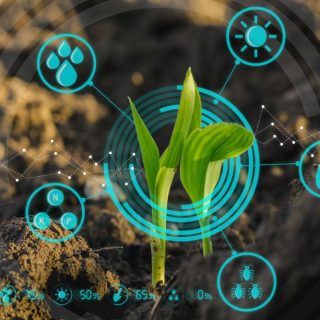
What makes this shift possible is the convergence of data, AI, and automation. Cameras and sensors observe crops in real time. AI models detect risks and recommend actions. Modern sprayers and autonomous tractors execute those decisions with high accuracy. Spraying becomes a targeted intervention, not a routine operation.
This matters beyond policy targets. Precision spraying reduces chemical losses, protects soil and water, and lowers exposure risks for farmers. It also helps manage rising input prices and increasing operational complexity. In practice, it turns sustainability into a measurable, operational advantage.
However, technology alone is not enough. Farmers need systems that work in real conditions, integrate with existing equipment, and deliver clear value. This is where applied research and field demonstrations play a critical role.
Smart Droplets contributes to this transition by testing how AI, digital farm models, and autonomous spraying systems can function together in real farms. The focus is not on isolated tools, but on practical, data-driven spraying that farmers can trust and use.
Precision spraying is no longer an experiment. It is quickly becoming the baseline for how crop protection will be done in Europe.