

Close

By reframe.food
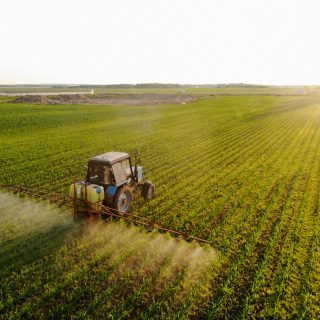
Stand at the edge of a sprayed field. The conversation about precision spraying is usually framed by a single number: chemicals applied per hectare. But the field does not end at the crop row. It continues into the soil column, into the ditch at the boundary, into the hedge at the far end, into the insects that return, or do not, the following spring.
Reducing the chemical load is the headline benefit of precision spraying. It is also the benefit that travels furthest, but the rest of its footprint rarely makes the press release.
Consider water. Less drift and less over-application mean fewer residues reaching surface water and groundwater. The European Environment Agency has repeatedly reported that pesticides and nitrates remain significant pressures on EU water bodies, and reduction at source is the most effective lever available. A droplet that lands on the plant it was meant for is a droplet that does not enter a ditch 20 metres downslope.
Soil carries a quieter version of the same story. A sprayer is heavy, and every pass compacts the ground beneath it. Fewer passes, made possible by better planning and variable-rate application, reduce that compaction and the disruption it causes to the below-ground ecosystems that modern agronomy has slowly learned to take seriously. Soil biology is not a spectator here. Earthworm density, mycorrhizal networks, and the porosity that governs water infiltration all respond to how often and how heavily the field is driven across.
Further out, into the moving parts of the landscape, sit pollinators and non-target species. Drift reduction has a direct and documented effect on bee exposure in orchard and field-margin settings, and the European Food Safety Authority has spent considerable time mapping exposure pathways. Precision at the nozzle is one of the few interventions that reduces exposure without reducing efficacy. The crop still gets treated. The hedge does not.
None of these co-benefits should be oversold. They depend on how precisely the technology is used, how well it is calibrated, and how the surrounding landscape is managed. A poorly set precision sprayer can perform worse than a well-set conventional one. The benefits are conditional, and the conditions matter.
They are also cumulative. Each year that a field is worked with less drift, fewer passes, and better-matched chemistry is a year in which the field edge gets a small amount of pressure removed. Landscape-level benefits are made of many of those small removals, across many farms, over many seasons.
This is the wider context in which initiatives such as Smart Droplets and similar European research efforts operate. They are not only reducing a number on a spray record. They are, incrementally, reducing the load a field places on the landscape around it.
“Use less” is a useful starting line, but the story only gets interesting once you follow where the reduced inputs are no longer going. Into fewer insects. Into cleaner ditches. Into soils that recover between seasons rather than only during them.
The yield balance sheet is a narrow way to read a field. The field’s wider balance sheet, the one the surrounding landscape quietly keeps, tells a longer story, and precision agriculture shows up in both.