loader image

Apple orchard Pilot

•

Pilot Leader

Eurecat - EUT

•

Biogeographical region of the Pilot

Spain, Mediterranean

•

Sector

Apple fruit

Range of digital technologies

Currently the apple orchard has the Hesperides platform as digital field notebook (https://hesperides.farm/) for data logging, management and fungus prediction. It also has a meteorological station to measure rain, temperature, humidity and wind speed. For each apple variety there are humidity probes in the soil (at three levels), in order to measure the humidity and adjust the irrigation accordingly, once per day. Also, the orchard field has poles every 10.8 meters that are georeferenced with centimeter precision.
In terms of spraying, it is done with human-driven tractors and they are equipped with a GNSS system to provide localization information only.

Target stakeholders

Farmers’ and their associations

Short description of the pilot

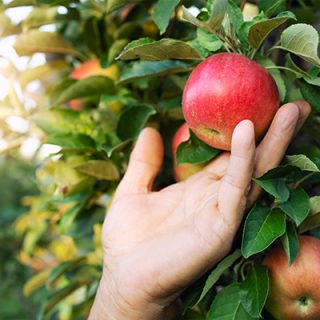
The apple orchard has an extension of 130 hectares and produces: Royal Gala, Golden Delicious, Red Delicious, Granny Smith, Fuji and Pink Lady.

In the context of the Smart Droplets project, it is important to highlight that they suffer mainly from 3 types of fungus: Apple Scab (Venturia Inaequalis), Alternaria Mali and Podosphaera leucotricha. All of them are difficult to treat in a curative stage, so prevention is of utmost importance. They all appear with the right combination of humidity and temperature, and rain generates a spreading effect.

To combat these fungus, the digital platform with logged data, together with prediction algorithms based on the RIMpro Apple Scab Prediction Model, suggests when to apply the spraying. Typically, the prediction stage is accurate within just 3 days before the rain, so usually the farmers use this time for spraying. Given the area of the orchard, and the limitation of working hours, it takes 7 tractors working 9 hours per day to cover the whole orchard with these prediction times. They also apply the spraying after it rains.

In this context, the pilot consists of automatizing a tractor in order to perform the spraying operations autonomously, together with sensors to detect the health of the plant to apply the right kind and amount of fungicides, at the right time, in the right place. Also, Smart Droplets will build a digital twin of the farm, with AI based prediction models implemented in order to improve the time and precision of the prediction algorithms, with the final goal of decreasing the appearance of these fungus.

Major goal

Given the descripted operative, the apple orchard waste is, in average, of about 8% of the total production per year (apples affected by fungus).

With the help of more precise AI based prediction algorithms, together with autonomous tractors equipped with sensors to detect the health of the plant in order to apply the right kind and amount of fungicides, at the right time, in the right place, Smart Droplets project expects to decrease the waste.

Also, as the autonomous tractors are able to work 24/7, and they will be able to apply the right amount of fungicides, there are also expectations to decrease the operative expenses and fungicide expenses in a great manner.

Progress & Milestones

Early 2024

The retrofitted tractor was returned to the manufacturer's facilities for essential hardware and safety modifications, which included a redesign of the braking system.

April & May 2024

The first season of nitrogen fertiliser was applied.

April, May, and June 2024

Fungicide and insecticide applications targeting apple scab, alternaria, and cydia/bugs were performed.

Late Summer 2024

The modified autonomous tractor was successfully redeployed to the pilot site.

September 2024

EUT and FEMAC participated in the "Shakers of the Territory" programme at Fira de Sant Miquel 2024 in Lleida, engaging the regional innovation ecosystem. EUT also presented the project's ROS2 integration at ROSCon 2024 in Seville.

Late 2024 to Early 2025

The pilot successfully demonstrated fully autonomous navigation and integrated spraying missions in the orchard.
December 2024

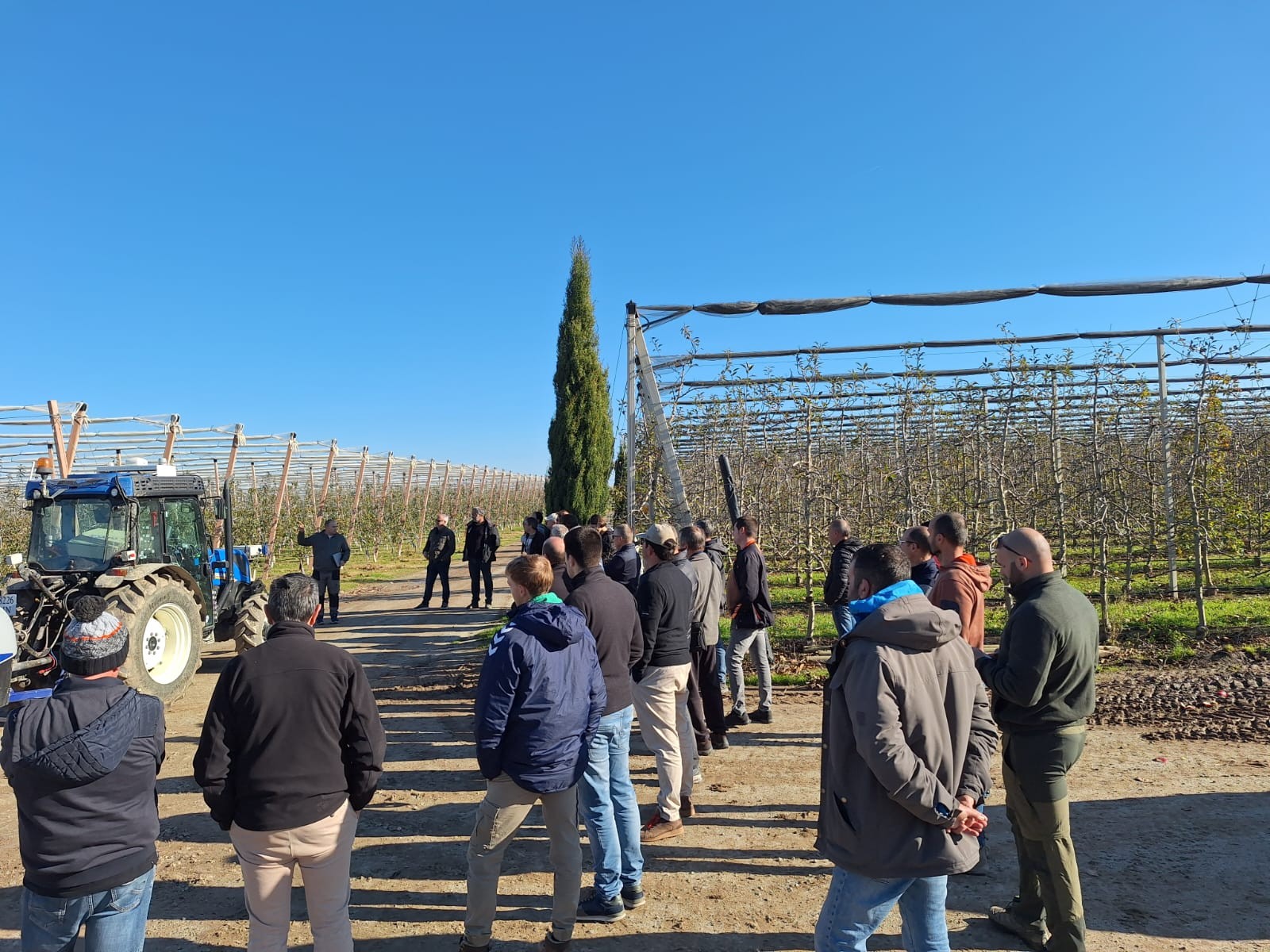
The inaugural Open Day was held at the Serrater premises in Girona. The event showcased a live demonstration of the newly integrated autonomous spraying system to 40 local farmers.
17–21 February 2025

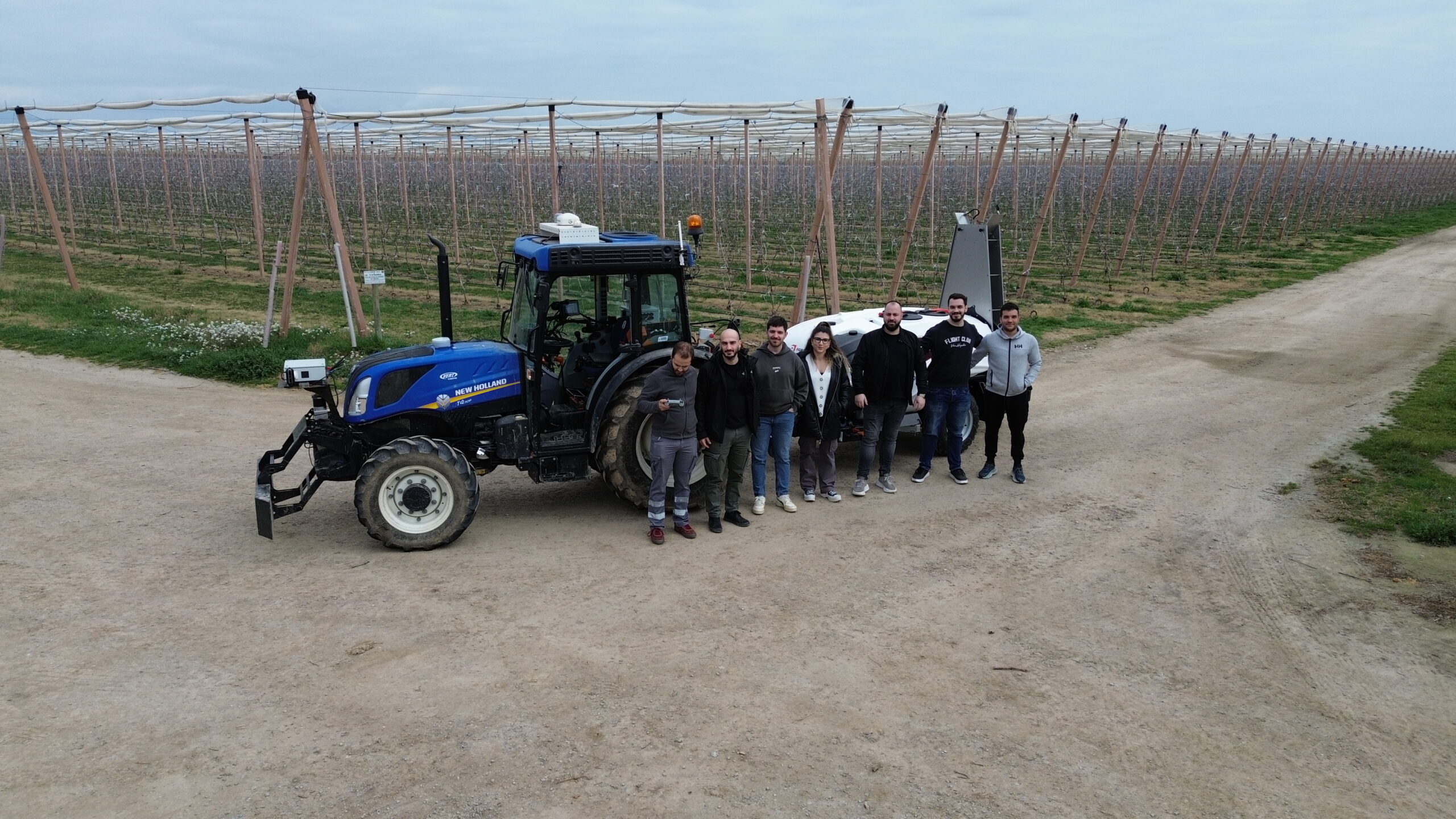
An "Integration Week" was held at the SERRATER SL premises. Partners Eurecat, the Agricultural University of Athens, and AGROMA worked together to integrate all physical components, including the retrofitted tractor, navigation unit, perception unit, and advanced DIS sprayer. The system was tested under real-world conditions using simulated digital twin inputs to execute realistic spraying missions, navigating, stopping, and spraying precisely as instructed without human intervention.

April & May 2025

The second season of nitrogen fertiliser application took place.

April, May, and June 2025

The second season of fungicide and insecticide applications was executed.

Throughout 2025

EUT and FEMAC actively disseminated the Spanish pilot's results across regional agri-tech events, including presentations of autonomous navigation and direct injection spraying at Expo Agritech in Malaga, the Agrobiotech Forum in Lleida, and the Future4Food Summit in Bilbao.
15 December 2025

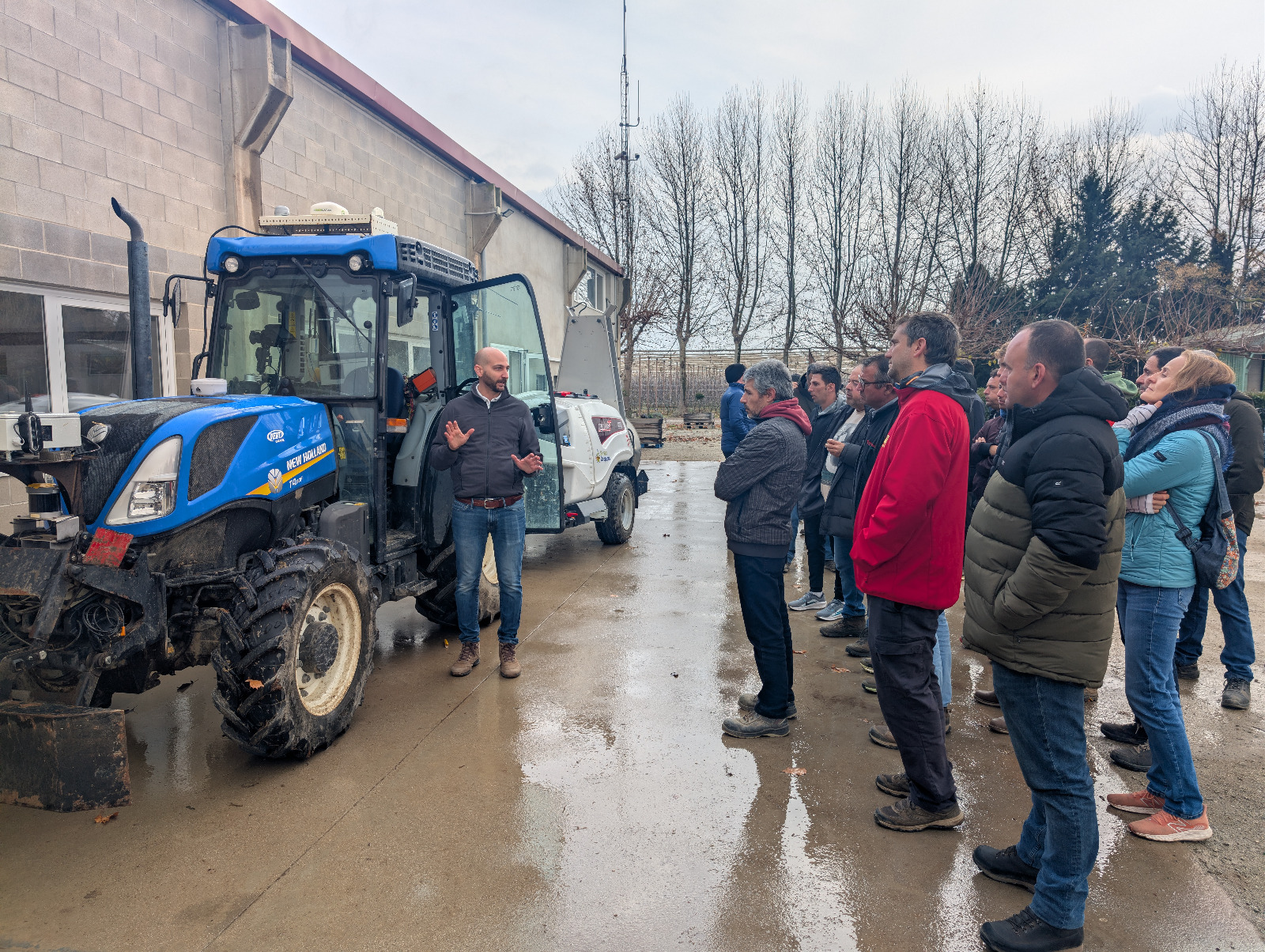
A second Open Day took place at the Serrater S.L. facilities in L’Armentera, Girona. The event engaged 34 farmers who attended an indoor technical session followed by a live outdoor field demonstration of the integrated system.

26 January 2026

FEMAC led a Data Space Working Group engagement in Lleida focused on agricultural data governance frameworks and interoperability standards, contributing data requirements derived from the Smart Droplets pilot.
26 February 2026

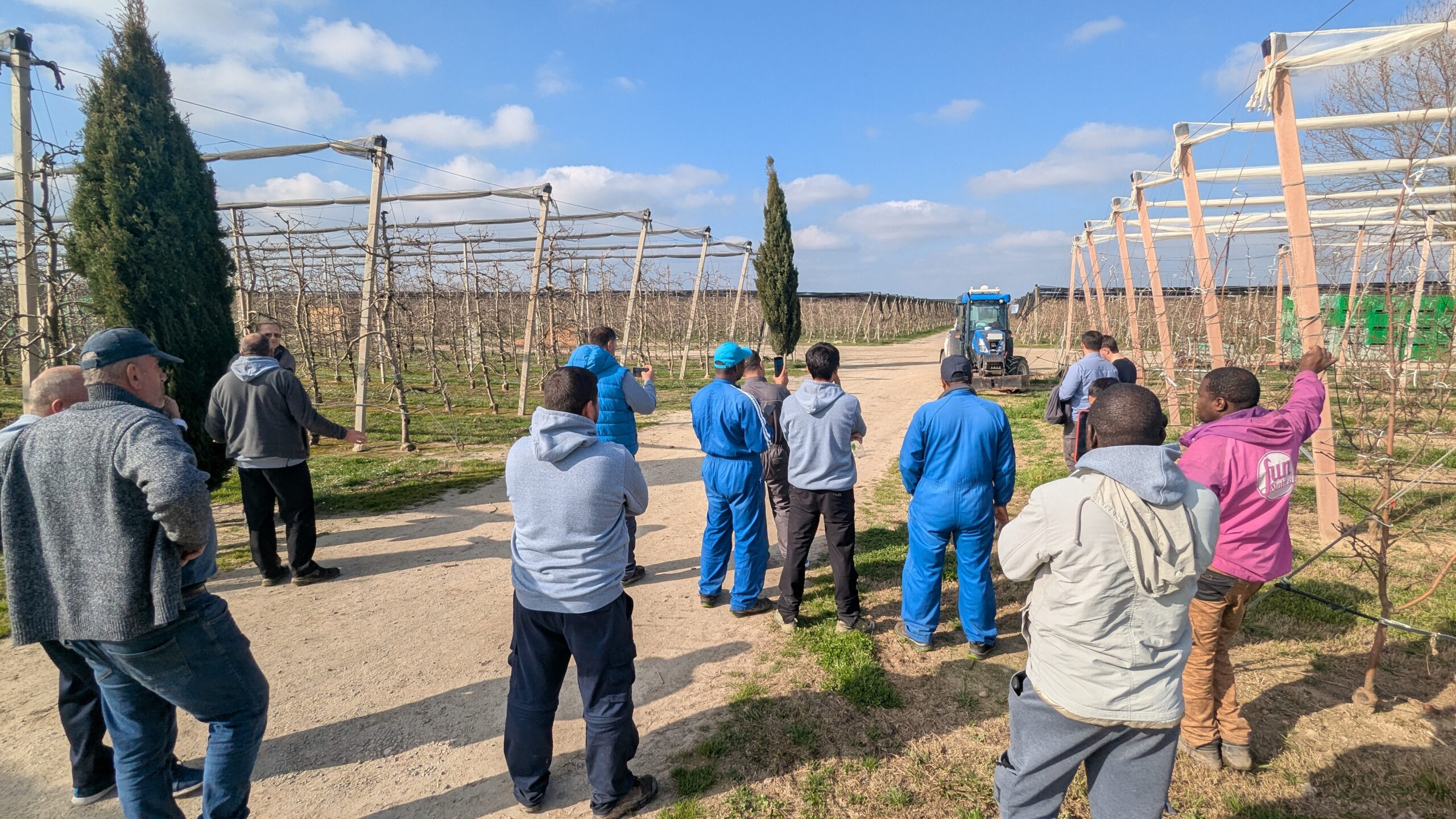
The final Open Day was held in Catalonia. This event demonstrated the fully autonomous tractor and its precision spraying capabilities without human intervention to approximately 25 farmers and machinery professionals.