
Close

By reframe.food
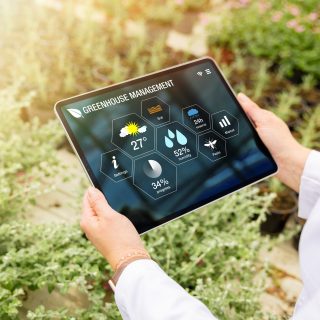
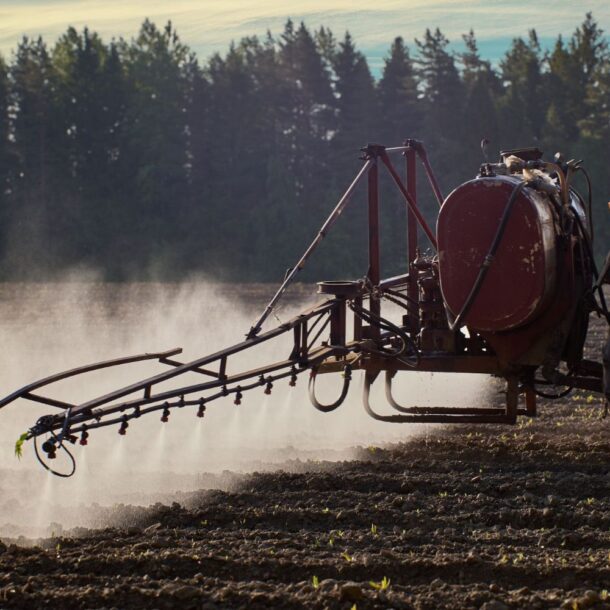
Walk up to a modern sprayer between passes and look inside the cab. The person behind the wheel is already doing a job their grandfather would not recognise. A screen shows the prescription map. A second screen shows boom-section status. A phone buzzes with a weather revision. The wheel itself is, for long stretches of the day, being followed rather than led.
There is a common way of telling this story: automation replaces operators. Robots come, people leave. It makes for a tidy headline, and it does not match what is actually happening in European fields.
What is happening is that the job is thickening.
Less time is spent on the repetitive mechanics of driving in straight lines and turning at headlands. More time is spent on judgment: reading a canopy, deciding whether to trust an AI recommendation, catching a misaligned nozzle before a tank’s worth of product goes to the wrong place. The steering wheel becomes one input among several. The cognitive load shifts upward.
That is not the same as the job disappearing. It is the job being rewritten.
The shift shows up clearly in how manufacturers describe cab interfaces and in what they train new buyers on. It shows up in European labour data too, where skilled agricultural operator shortages are a recurring theme in industry reporting. The Common Agricultural Policy has long included support for Agricultural Knowledge and Innovation Systems, partly in recognition that training infrastructure needs to evolve alongside the machines.
What does this new skill set actually look like in the cab? It begins with a working form of data literacy, less data science than the plain ability to read a prescription map, understand what a confidence score means, and know when a sensor is giving a reading that should be distrusted. Alongside it sits a capacity for systems diagnostics, the quick eye that tells a software fault from a mechanical fault from a calibration drift before the spray window closes. Threaded through both is judgement under partial information, where a farmer’s field knowledge, decades of it in many cases, becomes the check on a model’s recommendation rather than being replaced by it.
Projects like Smart Droplets are part of a broader European effort to build autonomous and semi-autonomous systems that take advantage of all three. The systems work best when the person next to them is trained to use them, not when the person is written out of the picture.
There is a version of the automation story that treats the operator as a legacy problem to be designed around. The version playing out in practice treats the operator as a supervisor of increasingly capable tools, and that version needs training programmes, apprenticeships, and vocational content that do not yet exist at the scale needed.
If machines are going to take on more decisions, operator training has to catch up with that trust. The skill set is not vanishing. It is being rewritten. Pretending otherwise leaves the people who actually do the work standing behind a curve the sector asked them to get in front of.