

Close
By reframe.food
There is a particular kind of disappointment familiar to anyone who works at the edges of agricultural research. A technology demonstrates beautifully in a trial plot. The same technology lands on a working farm, and something about it does not fit. Sometimes it is small: the cable is too short, the user interface assumes a different language, the calibration procedure needs a spare half-hour, no farmer has in the spring. Sometimes it is bigger. The reliability that held in a controlled trial evaporates in the complexity of real weather and real seasons.
The gap between “works” and “is trusted” is usually underestimated, and bridging it is most of the work.
Agricultural innovation in Europe is funded through layered programmes: Horizon Europe at the EU level, national research councils, regional initiatives, private R&D, farmer-led trials supported by the operational groups of the Common Agricultural Policy. The funding shapes what gets built. Public programmes tend to produce prototypes and evidence. Private investment tends to produce scalable products. The gap between those two outputs is where a surprising amount of promising work quietly stalls.
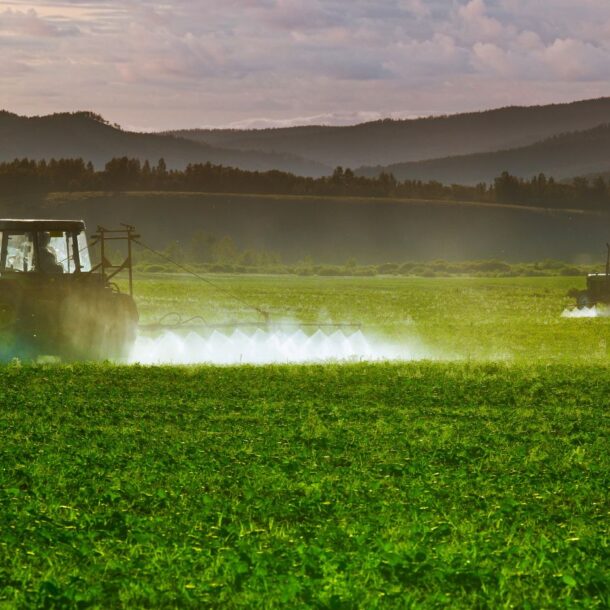
What closes the gap is usually less glamorous than the research that opened it. A sprayer controller that works flawlessly in a lab still has to survive mud, vibration, voltage sag when a second implement fires, and a cab temperature that swings 30 degrees between January and July. It has to be usable by someone whose working day is already full, which rules out any tool that demands a master’s degree in data science to operate, no matter how good its model. And a farmer buying a new capability is also buying the quieter assumption that someone will pick up the phone in three years when it stops working.
None of that is a research question. All of it is the real constraint on adoption.
There is also a softer bridge that matters. Extension services, advisory networks, and farmer-to-farmer demonstration days are how most genuinely new techniques actually move through European agriculture. A trusted neighbour running a new precision sprayer for a season does more to legitimise the technology, locally, than any published trial. Research that engages early with those networks tends to travel further than research that arrives only at the paper stage.
Projects like Smart Droplets sit inside the publicly funded end of this pipeline, alongside many others across Europe. The pipeline works best when what comes out of it is designed from the start to hand off to the private builders, advisory networks, and farmers who will eventually own the last mile.
The honest summary is that promising agricultural technologies fail on the last mile more often than on the first. The prototype is the beginning of the journey, not the end of it. The sector is slowly learning to budget for that fact, and the projects that do are the ones whose results survive after the funding cycle closes.
Innovation reaches the farm not when it is invented, but when it is trusted. Those two things happen on different timelines, and a lot of careful work sits between them.