
Close

By reframe.food
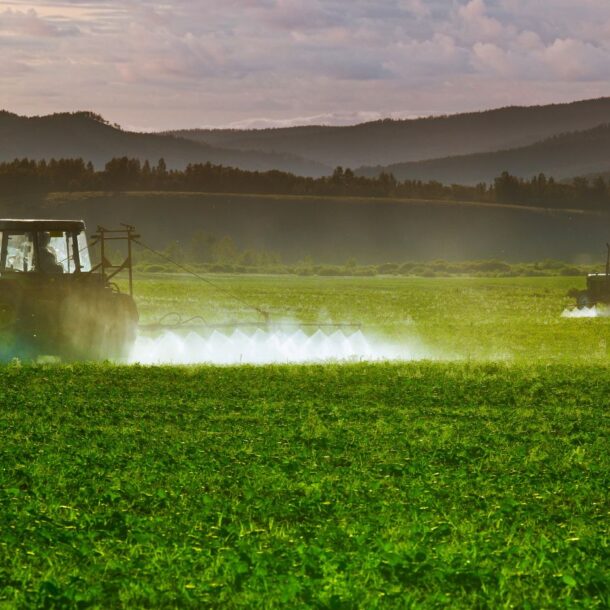
A sprayer passes over a crop in seconds. In that short window, millions of droplets leave the nozzles and go somewhere. Most of what people argue about when they argue about precision spraying is really an argument about where those droplets end up.
Precision sprayers are often described as a software story: smarter maps, smarter cameras, smarter decisions. That is part of the picture. Underneath it, there is a far older story, and it is a physics story. A droplet is a small mass of liquid moving through air, subject to gravity, drag, evaporation, and the turbulence around a moving boom. The question of whether it lands where the map said to put it is decided by those forces, not by the software that drew the map.
Four variables shape the outcome.
Size. Droplet diameter is measured in microns, and the spraying community groups droplets into classes from very fine (under about 150 microns) through to extremely coarse (above 500). The classes are not academic. They describe how likely a droplet is to drift, evaporate, or bounce off a leaf. Very fine droplets give excellent coverage in a dense canopy but drift readily on light wind. Very coarse droplets resist drift but can miss fine leaf structures and run off a waxy surface to the soil.
Speed. Exit velocity, combined with the forward speed of the sprayer, determines how the droplet meets the canopy. Too fast and droplets bounce or shatter. Too slow and they are carried sideways before they arrive. Nozzle pressure tuning is part of the calibration that separates a good pass from a wasted one.
Air conditions. Temperature, humidity, and wind form a moving background that the droplet has to travel through. A 20-micron droplet in warm, dry air can evaporate before it reaches the crop. A larger droplet in a crosswind can still land metres from its intended target. The weather forecast is a spraying variable before it is a planning inconvenience.
Canopy geometry. A fungicide aimed at the underside of a leaf has a different target problem than a herbicide aimed at bare soil between rows. The same nozzle that covers cereal heads well may leave the lower canopy untreated, and vice versa. Target placement is shape-dependent.
These variables interact. A droplet size that is ideal for one operation is wrong for the next, which is why modern sprayers increasingly carry multiple nozzle types and switch between them based on conditions.
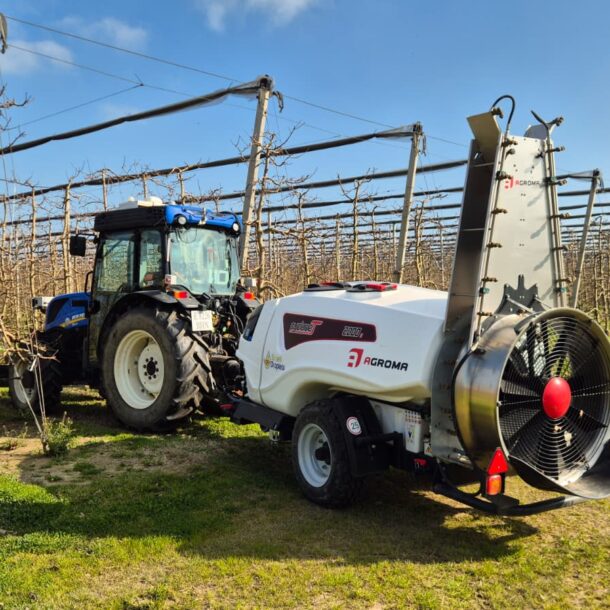
Projects like Smart Droplets sit in the wider European research community trying to close the loop between sensing the canopy in real time and choosing the right droplet for it. But the improvement at the nozzle is what ultimately decides whether a prescription makes it onto the plant.
Every sophisticated recommendation eventually resolves into a droplet hitting or missing a leaf. Software at the top of the pipeline only pays off if the physics at the bottom cooperate. That is why droplet-level thinking is quietly becoming load-bearing again in the spraying research community, after a decade in which the attention moved upstream toward maps and models.
The map points. The nozzle decides.