Explainable AI in agriculture: keeping farmers in the loop
By reframe.food
For AI systems to be trusted in farming, accuracy is not enough. Farmers need to understand how recommendations are produced and how much confidence they can place in them. This is where explainable AI becomes essential.
Explainable AI does not aim to turn farmers into data scientists. Its purpose is simpler. It translates complex model outputs into reasoning that aligns with agronomic logic. Instead of presenting a recommendation as a fixed instruction, explainable systems show the factors behind it, such as weather conditions, crop stage, disease pressure, or historical field behaviour.
This clarity supports better decisions. When farmers see why a model suggests reducing a dose or delaying an intervention, they can judge whether it fits their local knowledge. Trust grows when AI confirms experience, and even more when it challenges it with evidence that can be understood.
Equally important is the human-in-the-loop approach. In agriculture, AI should support decisions, not automate them blindly. Farmers must be able to adjust parameters, override recommendations, and learn from outcomes. This shared control reduces risk and reinforces accountability.
Explainability also improves system performance over time. When farmers provide feedback on recommendations, models can be refined and adapted to local conditions. The result is not a static tool, but a learning system shaped by real use.
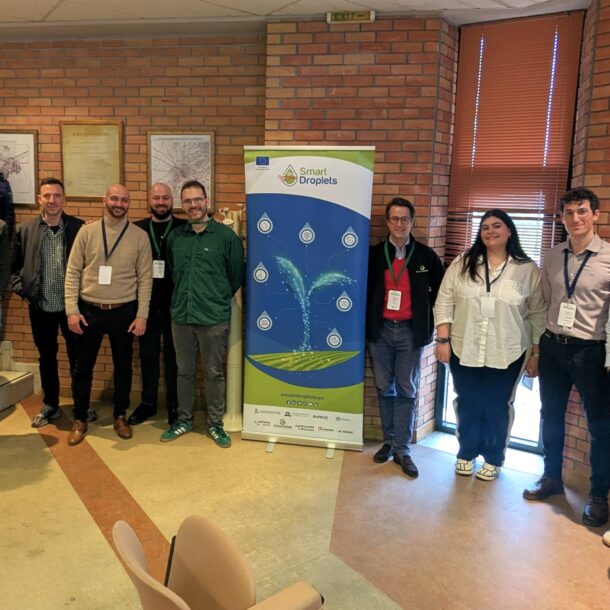
Smart Droplets applies these principles by combining AI recommendations with digital farm models and field-level validation. The project focuses on systems that explain their logic, adapt to changing conditions, and keep farmers firmly in control of final decisions.
In the end, successful AI in agriculture will not be defined by autonomy alone. It will be defined by collaboration between human expertise and machine intelligence.