


Close
There’s a persistent myth about agricultural robotics that needs addressing. The story goes something like this: autonomous machines will replace farmers, turning agriculture into a remote-controlled operation run from air-conditioned offices by people who’ve never set foot in a field.
This vision misses the point. The future of farming isn’t about removing farmers from agriculture. It’s about giving them better tools to do work that’s becoming increasingly complex and demanding.
Smart Droplets operates on a different principle: technology works best when it’s developed with farmers, not just for them. This multi-actor approach brings together researchers, technology developers, farmers, agronomists, and policymakers from the very beginning of the innovation process.
Why does this matter? Because academic research in a controlled environment is fundamentally different from implementation on a working farm. A system that performs perfectly in a university pilot site might fail on the first uneven turn in a real orchard. Software that makes perfect sense to its developers might be incomprehensible to the person who needs to use it at 6 AM in a tractor cab.
The smart approach recognizes this reality. Rather than developing technology in isolation and hoping farmers will adopt it, Smart Droplets builds solutions through continuous dialogue with the people who will actually use them. Working groups with farmers from pilot sites in Spain and Lithuania shape how the technology develops. Their feedback doesn’t come after the system is built. It comes during design, testing, and refinement.
There’s expertise in robotics, AI, and computer vision within the Smart Droplets consortium. But there’s also decades of accumulated farming knowledge from people who understand their land, their crops, and their challenges in ways no external expert ever could.
A farmer knows that weather patterns vary not just year to year, but field to field. They understand the difference between what a textbook says about disease progression and what actually happens in their specific microclimate. They can look at a crop and spot problems that wouldn’t show up in sensor data for another week.
This knowledge doesn’t become obsolete when robots enter the picture. It becomes more valuable. Autonomous systems need to be taught what to look for, how to respond to anomalous situations, when to flag conditions that require human judgment. That teaching comes from farmer expertise translated into digital form.
Agricultural robotics faces a fundamental challenge: trust. Farmers work with narrow margins and unpredictable conditions. A failed harvest doesn’t just mean lost revenue; it can mean the difference between staying in business and selling the farm.
Asking someone to trust an autonomous system with their livelihood is asking a lot. Trust isn’t built through marketing presentations or impressive demonstrations. It’s built through transparency, proven reliability, and the understanding that if something goes wrong, there’s someone who can explain what happened and how to prevent it next time.
This is where the collaborative approach becomes essential. When farmers are involved in developing and testing technology, they understand its capabilities and limitations. They know what the system can handle autonomously and where human oversight remains critical. They’re not outsourcing decision-making to a black box. They’re gaining tools that extend their capabilities while keeping them firmly in control.
In practice, multi-actor innovation means field demonstrations where farmers see technology working in conditions similar to their own. It means working groups where they can voice concerns and suggest improvements. It means training programs that don’t just explain how to operate equipment but build a genuine understanding of what the technology is doing and why.
It also means acknowledging when the technology isn’t ready or when farmer skepticism is justified. Not every innovation works as planned. Not every problem has a technological solution. The collaborative approach creates space to identify these situations early, before significant time and resources are wasted.
The ultimate test of agricultural innovation isn’t whether it works on carefully selected demonstration farms. It’s whether it can scale to different crops, different regions, and different farming systems. This is where multi-actor engagement expands beyond the immediate project partners.
Smart Droplets engages with farmer associations, agricultural extension services, and innovation networks across Europe. These connections ensure that insights gained in Spanish apple orchards and Lithuanian wheat fields can inform adoption in Italian vineyards or Polish vegetable farms. Not every solution will transfer directly, but the lessons learned through collaboration have broad applicability.
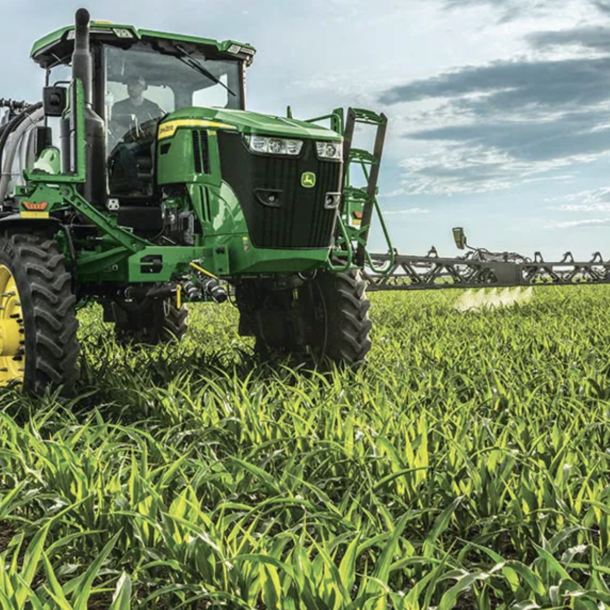
Here’s what the future actually looks like: farmers using autonomous systems to handle repetitive, precision-intensive tasks while focusing their own time and judgment on higher-level decisions. Robots execute spraying plans based on AI recommendations, but with farmers monitoring results and adjusting strategy as conditions change. Technology handles the tedious work of driving through fields in precise patterns, while farmers handle the skilled work of interpreting data and managing their operation as a whole.
This isn’t about replacing human expertise. It’s about augmenting it. The farmer remains the center of the operation, but with capabilities that weren’t possible with traditional equipment alone.
The multi-actor approach doesn’t guarantee success, but it significantly improves the odds. Technology developed in collaboration with end-users tends to be more practical, more robust, and more likely to be adopted. It avoids the common pitfall of impressive innovation that nobody actually wants to use.
For agricultural robotics to fulfill its potential, this collaborative model needs to become the standard rather than the exception. That means researchers are willing to have their assumptions challenged. It means technology companies prioritize usability alongside capability. It means farmers are willing to engage with new approaches despite the demands on their already limited time.
When these actors work together, something remarkable happens. Technology becomes more practical. Farmers become more capable. Agriculture becomes more sustainable. And the future starts to look less like robots replacing farmers and more like farmers and robots working together toward shared goals.
Smart Droplets brings together farmers, researchers, technology companies, and policymakers to develop practical precision agriculture solutions. The project includes demonstration sites in Spain and Lithuania, training programs through the Smart Droplets Academy, and ongoing engagement with agricultural stakeholders across Europe. Learn more at smartdroplets.eu